All animals are equal but some are more equal
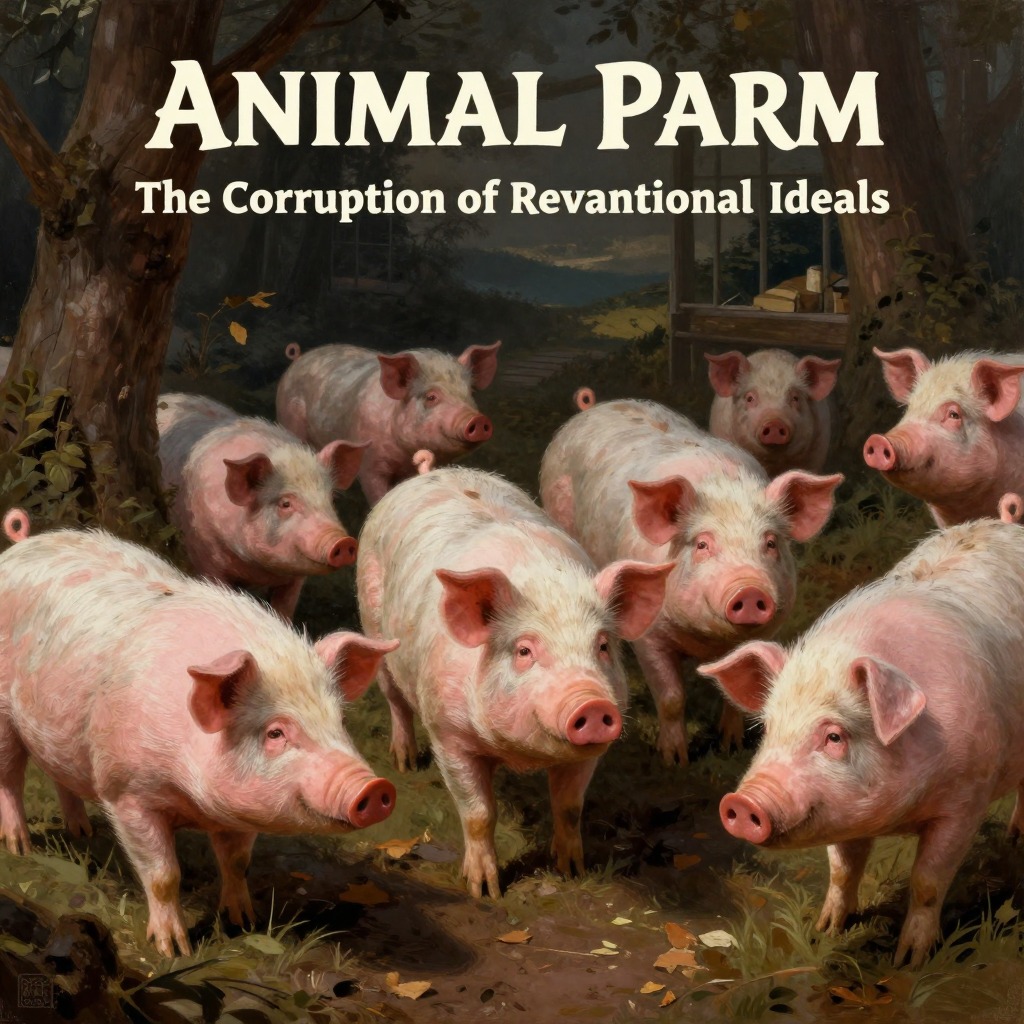
Animal FarmThe maxim "All animals are equal" was the foundational principle of Animalism, first articulated by Old Major in his speech to the assembled animals as the culmination of a vision in which no animal would tyrannize over another. It became the Seventh Commandment, inscribed in white letters on the end wall of the big barn by Snowball, and was accepted unanimously by the animals after the Rebellion. The phrase represented the core of the revolutionary dream: a society of brothers where all were equal. In the early days, the animals believed this literally, and Snowball's reduction of the Commandments to the simple slogan "Four legs good, two legs bad" seemed to preserve the same essential principle of equality against human tyranny.
Over time, the pigs began to alter the Commandments to suit their growing privileges. The Fourth Commandment gained the words "with sheets," allowing them to sleep in the farmhouse beds. The Fifth Commandment acquired "to excess," legitimizing their consumption of alcohol. The Sixth Commandment was modified to "without cause," providing a post-hoc justification for the executions of animals accused of treason. These changes were facilitated by Squealer's persuasive rhetoric, which recast every privilege as a necessity for the common good, and by the sheep's endless bleating of the simplified slogan, which drowned out any dissent. The original equality was gradually hollowed out as the pigs assumed a superior status, and the animals' memories were manipulated into accepting that these modifications had always been part of the law.
The final and most explicit revision appeared after the pigs had fully adopted human habits. One evening, following the spectacle of the pigs walking on their hind legs—Squealer strolling across the yard, Napoleon emerging majestically upright with a whip in his trotter, and the sheep chanting "Four legs good, two legs better"—Clover and Benjamin discovered that the entire wall now bore only a single sentence: "All animals are equal but some animals are more equal than others." The new commandment retroactively justified the entire structure of inequality that had been built over the years, transforming the original revolutionary ideal into a cynical axiom of the pigs' dictatorship. It was the ideological capstone of a process that had begun with the first modification of the Commandments.
The concept reached its logical conclusion in the final scene, where pigs and human farmers gathered at the same table, indistinguishable in appearance and behavior. The phrase "more equal" had become the cornerstone of the new order, erasing the memory of the old dream. The animals outside could no longer tell pig from man, and the Seven Commandments had been reduced to a single, self-contradictory axiom that perfectly expressed the betrayal of the Rebellion. The principle that had once united the animals now served as the ultimate justification for their subjugation, completing the arc from liberation to tyranny.